Seoul’s traditional markets may sell similar everyday goods — vegetables, seafood, meat, snacks, and street food — but each market has its own atmosphere and purpose.
Below are five easily accessible traditional markets in Seoul, including location, nearest subway station, and key characteristics.
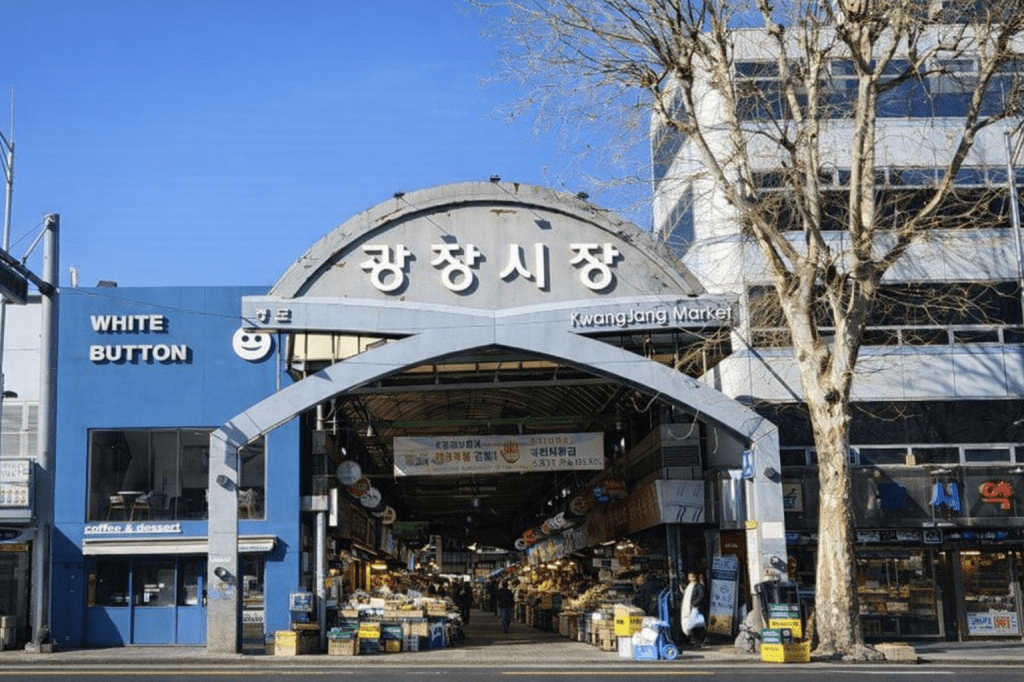
1. Gwangjang Market
Location
88 Changgyeonggung-ro, Jongno-gu, Seoul
Nearest Subway Stations
- Line 1: Jongno 5-ga Station (Exit 8, about 3 minutes on foot)
- Line 2 & 5: Euljiro 4-ga Station (Exit 4, about 5–7 minutes on foot)
Key Characteristics
- Established in 1905, one of Seoul’s oldest markets
- Famous for Korean street food such as mung bean pancakes and gimbap
- Indoor arcade structure, suitable in all weather
- Popular with international visitors
Best for: First-time visitors and food-focused travelers.
2. Sindang Jungang Market
Location
Toegye-ro 85-gil area, Jung-gu, Seoul
Nearest Subway Station
- Line 2 & 6: Sindang Station (Exit 1, about 5 minutes on foot)
Key Characteristics
- Neighborhood-style traditional market
- Close to Sindang Tteokbokki Town
- Less touristy, more residential atmosphere
- Affordable and casual food options
Best for: Experiencing a more local side of Seoul.
3. Suyu Traditional Market
Location
Dobong-ro 67-gil area, Gangbuk-gu, Seoul
Nearest Subway Station
- Line 4: Suyu Station (Exit 8, about 5 minutes on foot)
Key Characteristics
- Large-scale neighborhood market
- Focused on fresh groceries and daily shopping
- Primarily visited by local residents
- Competitive prices
Best for: Observing everyday life in northern Seoul.
4. Gyeongdong Market
Location
Gosan-ro 36-gil area, Dongdaemun-gu, Seoul
Nearest Subway Station
- Line 1: Jegi-dong Station (Exit 2, about 3–5 minutes on foot)
Key Characteristics
- Korea’s largest herbal medicine market
- Connected to the traditional medicine district (Seoul Yangnyeongsi)
- Combination of wholesale and retail
- Strong traditional atmosphere
Best for: Visitors interested in Korean herbal medicine and specialty ingredients.
5. Jamsil Saemaeul Market
Location
Seokchonhosu-ro 12-gil area, Songpa-gu, Seoul
Nearest Subway Stations
- Line 2 & 8: Jamsil Station (Exit 10, about 10 minutes on foot)
- Line 9: Songpanaru Station (Exit 1, about 5–7 minutes on foot)
Key Characteristics
- Neighborhood market in the Jamsil area
- Relatively organized and clean environment
- Close to major attractions such as Lotte World and Seokchon Lake
- Popular among local families
Best for: Combining sightseeing with a traditional market visit.
What You Can Do at Traditional Markets in Seoul
Even though many markets sell similar goods, the experience itself is what makes them unique.
1. Try Korean Street Food
Enjoy freshly prepared snacks such as pancakes, rice cakes, fried foods, and sausage.
2. Shop for Fresh Ingredients
Purchase vegetables, fruit, seafood, meat, and ready-made side dishes at local prices.
3. Experience Local Culture
Interact directly with vendors and observe daily life in Seoul neighborhoods.
4. Create Your Own Food Tour
Sample small portions from different stalls rather than dining at one restaurant.
5. Discover Specialty Items
Some markets offer textiles, herbal medicine, dried seafood, or traditional ingredients not easily found in supermarkets.
Visiting a traditional market provides a deeper look into everyday Korean life beyond modern shopping malls and tourist attractions.

 G morning B night
댓글 남기기