Where history feels like a park, not a lesson
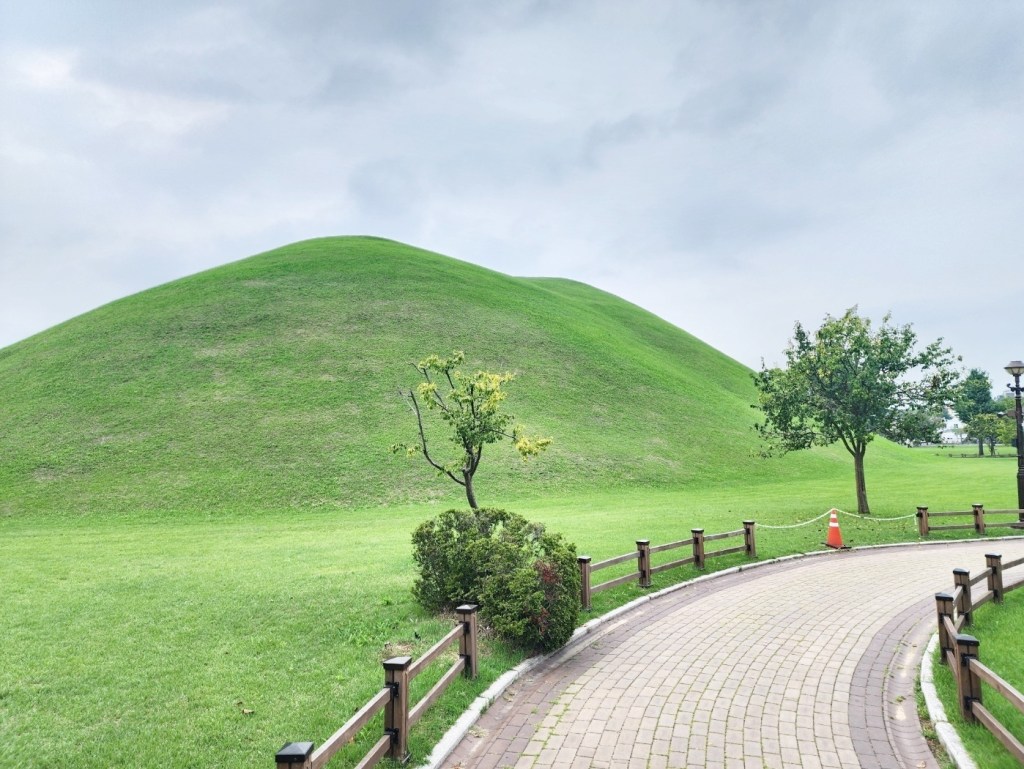
After visiting Cheomseongdae, Gyeongju’s historical sites begin to feel different.
They are no longer just stone structures or monuments.
Here, even the shape of the land itself tells a story.
Daereungwon is one of those places.
As soon as we entered, our children naturally slowed down and started looking around.
Daereungwon feels more like a royal park than a tomb site
Daereungwon is a large area where royal tombs from the Silla period are gathered.
Despite being a burial ground, it does not feel heavy or intimidating.
Instead, it feels like a wide, open park.
Gently rounded burial mounds rise from green grass,
paths are wide and flat,
and the space feels calm and spacious.
For families traveling with children,
Daereungwon is one of the easiest historical sites in Gyeongju to walk through.
The question kids always ask
Children almost always ask the same thing.
“Why are the tombs so big?”
“Is someone really inside?”
That simple question becomes the start of a history conversation.
“These were tombs for kings long ago.”
“They buried treasures together with the king.”
Without complicated explanations,
each mound becomes a hill with a story.
What is Cheonmachong?
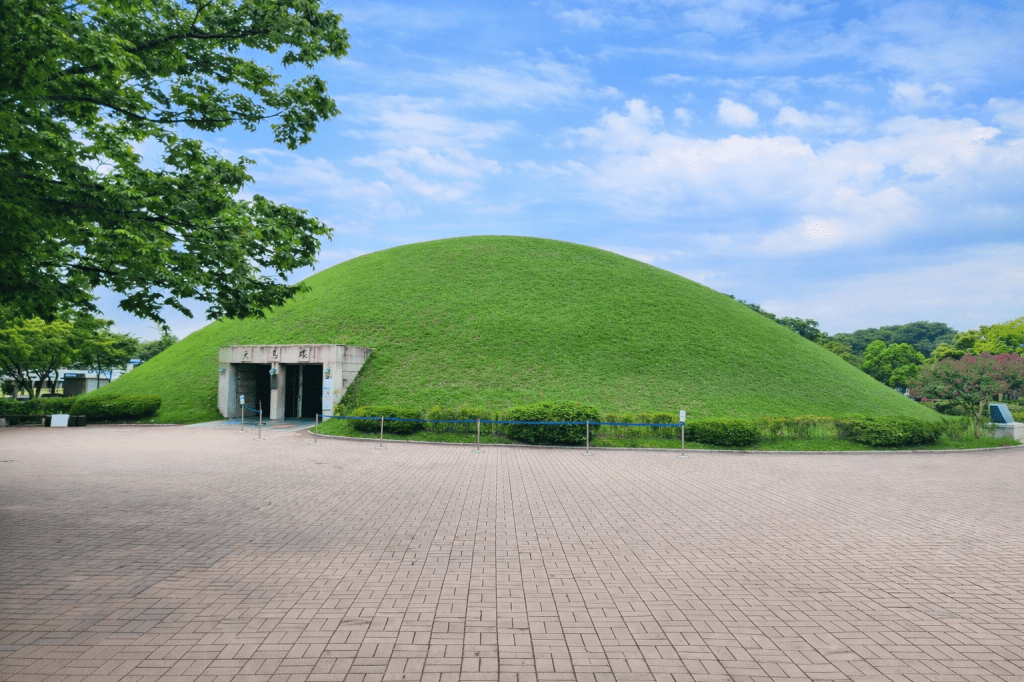
Among the many tombs inside Daereungwon,
Cheonmachong is the one most worth visiting with kids.
Cheonmachong is a Silla royal tomb that is open to the public.
Unlike most burial mounds, visitors can actually go inside and see
how a Silla tomb was constructed.
The tomb is famous for the discovery of the Cheonmado,
a painting of a horse flying through the sky.
This image gives insight into how the Silla people imagined
the afterlife and royal authority.
Cheonmachong is not just a tomb.
It is a place where visitors can understand
Silla funeral customs and their view of life beyond death.
If your child ever asks,
“What does the inside of a tomb look like?”
this is the best place to start.
Stepping inside changes the experience
Inside Cheonmachong, the atmosphere becomes noticeably quieter.
Walking through the dim passage,
our children reacted immediately.
“We’re really inside.”
“This is where it was found?”
At that moment, Daereungwon stopped feeling like a park
and started feeling like living history.
Why visiting after Cheomseongdae makes sense
After learning at Cheomseongdae
that the Silla people paid close attention to the sky,
the objects and ideas inside Cheonmachong felt more connected.
The sky, stars, kings, death, and the afterlife
all seemed part of the same worldview.
Daereungwon and Cheonmachong are not just places of burial.
They show how the Silla people understood life, power, and what comes after.
Why Daereungwon works well for families
- Paths are wide and easy to walk
- The space feels open and safe
- Children can move freely without constant restrictions
Rather than a place where children must stay silent,
Daereungwon feels like a space where families can walk, talk, and think together.
Final takeaway
Daereungwon and Cheonmachong are historical sites,
but they feel especially meaningful when visited with children.
They turn history into something you walk through,
not something you simply read about.

 G morning B night
댓글 남기기