A Temple That Becomes Interesting Once You Start Asking Why
Bulguksa Temple is one of the most famous sites in Gyeongju, yet at first glance, it feels surprisingly calm and understated.
It isn’t massive, dramatic, or instantly overwhelming.
Without context, Bulguksa can feel like “just a beautiful temple.”
But once you begin to understand how it was designed and why, the entire place changes.
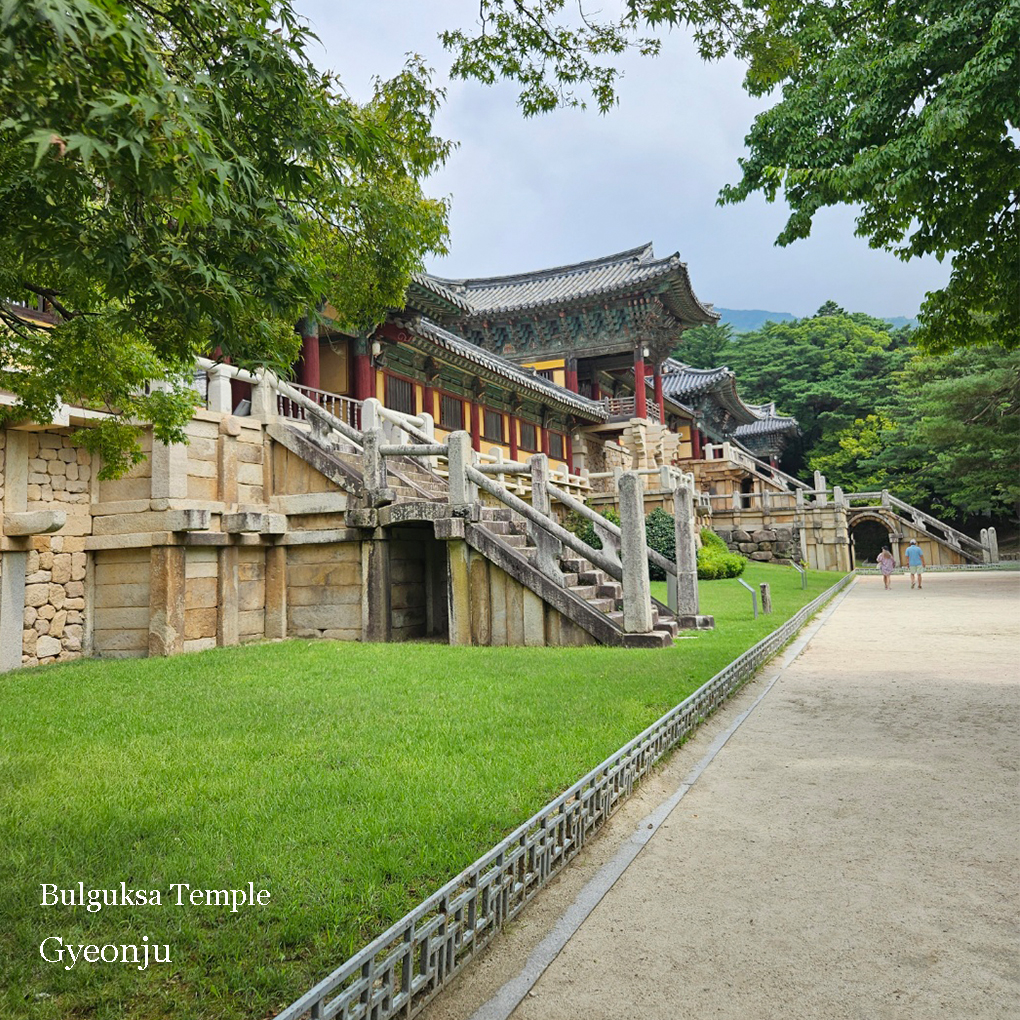
Why Bulguksa Was Built
Bulguksa was constructed during the Unified Silla period as a state-level project rather than a private religious space.
Its purpose was ambitious: to recreate the ideal Buddhist world in the real, physical landscape.
Because of this, Bulguksa is less about individual buildings and more about overall structure, balance, and movement.
A Temple Designed to Be Walked Through
As you move through Bulguksa, you naturally walk from lower ground to higher ground.
This isn’t accidental.
The layout represents a journey:
- the human world below
- bridges and stairways as transition
- and the upper courtyard as the realm of enlightenment
Bulguksa isn’t meant to be viewed from a single spot.
It’s a temple designed to be understood through movement.
Two Pagodas, One Question
At the heart of Bulguksa stand two pagodas side by side:
Seokgatap and Dabotap.
- Seokgatap is simple, symmetrical, and restrained.
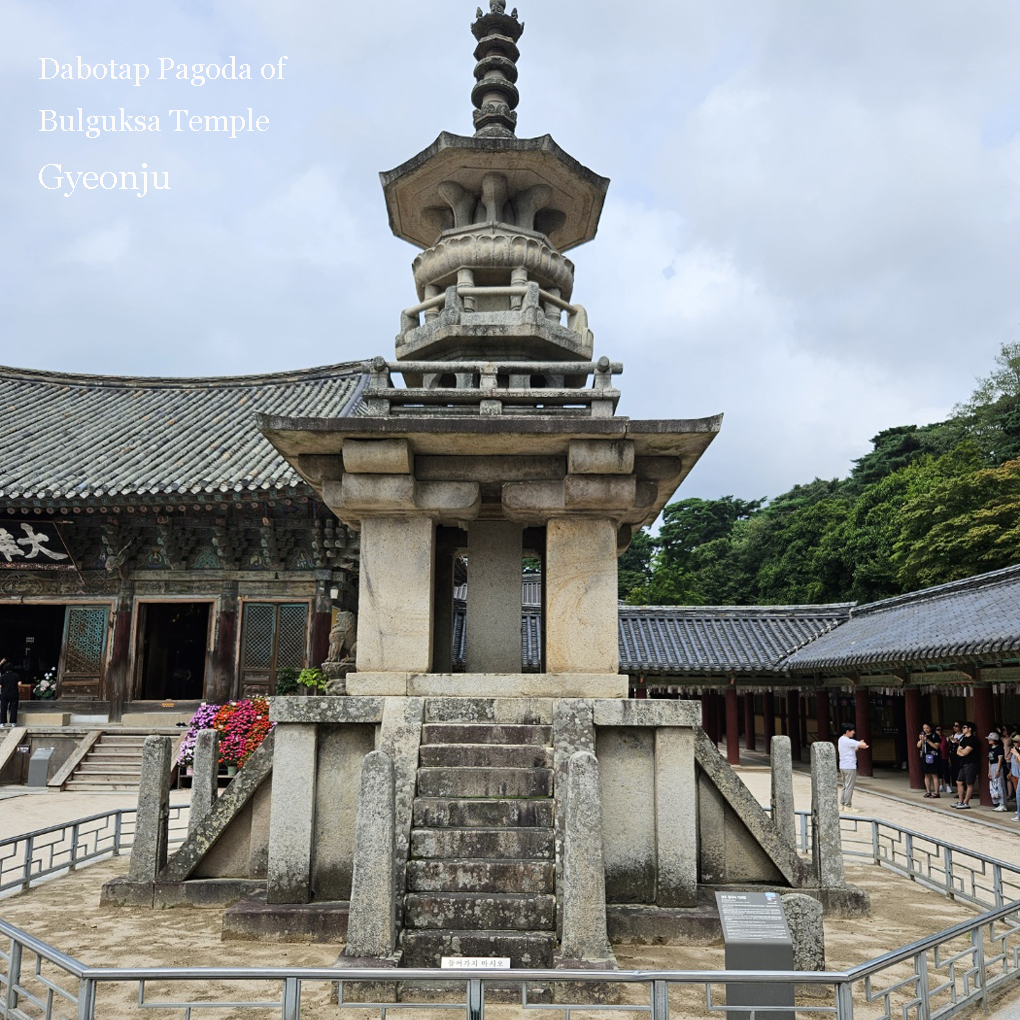
- Dabotap is complex, decorative, and sculptural.
Their contrast is intentional.
They represent two different ways of expressing the same Buddhist truth—one through simplicity, the other through richness.
This contrast is where Bulguksa becomes truly interesting.
What History Took Away
There is another layer to this story.
Dabotap was originally even more elaborate than it appears today.
During the Japanese colonial period, several decorative elements were lost or removed, leaving visible gaps in its structure.
Seokgatap, by contrast, survived largely intact.
Its simplicity made it less vulnerable over time.
Today, the two pagodas stand not only as philosophical symbols, but also as quiet reminders of how history itself shapes what remains.
Bulguksa and Seokguram: One Story, Two Spaces
Bulguksa and Seokguram Grotto were designed as a pair.
- Bulguksa is open, expansive, and built on contrast.
- Seokguram is enclosed, focused, and complete within a single space.
Together, they show how Silla combined architecture, belief, and engineering to express Buddhist ideas in very different ways.
Seeing both places turns Gyeongju into a city of understanding, not just sightseeing.
Final Thoughts
Bulguksa is not impressive because it is large or dramatic.
It is impressive because it teaches through structure and contrast.
If you walk through without asking questions, it may feel ordinary.
But if you understand why the temple rises the way it does,
and why two completely different pagodas stand side by side,
Bulguksa becomes quietly memorable.
After visiting Seokguram, Bulguksa feels like the natural next chapter.

 G morning B night
댓글 남기기